The Balayage Process, Step by Step: What Actually Happens (2026 Stylist Guide)
A full 9-step walkthrough of what happens from the moment you sit in the chair to the moment you leave — consultation, sectioning, hand-painting, open-air processing, shampoo, toning, conditioning, cut, and style. Written by a Las Vegas colorist with 20 years behind the chair.
By Crystal Frehner, Hottie Hair co-founder. A step-by-step walkthrough of what happens from the moment you sit in the chair to the moment you leave — written by a stylist who has done thousands of balayage appointments across our three Las Vegas locations.
The balayage process is a hand-painted lightening technique performed in 9 steps over 3 to 5 hours: consultation, sectioning, hand-painting the lightener, open-air processing, shampoo, toning, conditioning, cut, and final styling. Every step exists for a chemistry reason, and skipping or rushing any of them is where balayages go wrong. Here's exactly what happens and why.

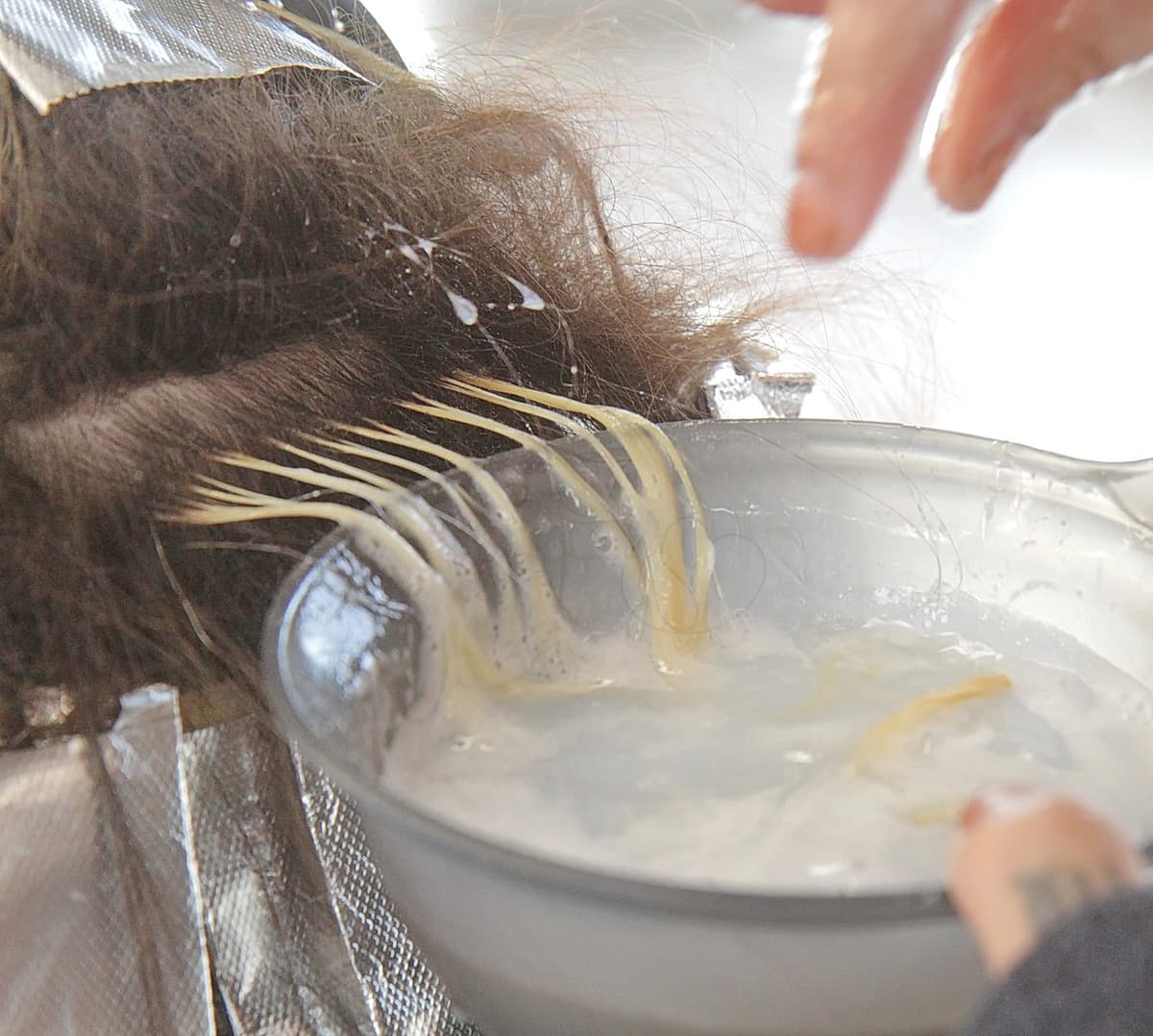
Hand-painting lightener at our West Charleston color station — the signature balayage movement that foil highlights can't replicate
In This Guide
The 30-Second Answer
- Balayage takes 3-5 hours total, broken into 9 distinct steps from consultation through final styling.
- The signature step is hand-painting lightener in freehand sweeps (the word "balayage" is French for "sweeping") instead of saturating sections in foils.
- Processing happens in open air, not under heat, which is what creates the softer root-to-tip transition and longer grow-out balayage is known for.
- A toner always follows the lightener — this is the step that determines whether you leave looking warm, cool, or neutral. Skipping toner is the #1 reason balayages turn brassy fast.
- Session length depends on your starting level, desired lift, and hair density — darker starting colors and thicker hair take longer because the lightener needs more time and more sections.
Before the Appointment: What Happens at the Consultation
A good balayage starts before the first brush of lightener touches your hair. We always recommend a free consultation first — 15-30 minutes to analyze your starting level, hair integrity, previous color history, and inspiration photos. We use that time to set honest expectations: how many sessions it may take to reach your target, what the maintenance cycle will look like, and whether balayage is the right technique versus traditional foiled highlights or baby lights.
Key things a stylist assesses at the consultation:
- Starting level (how dark your natural or current color is, on a 1-10 scale where 1 is black and 10 is lightest blonde)
- Prior chemical history — box dye, prior highlights, henna, relaxers, and perms all affect how your hair will lift
- Porosity and density — porous or damaged hair lifts faster but unevenly; dense hair requires more sections
- Lifestyle and maintenance tolerance — balayage's grow-out is gentler than foils, but you'll still want a touch-up every 8-12 weeks for a polished look
- Realistic session count — going from level 3 brunette to level 9 bright blonde usually takes 2-3 sessions, not one
If you've already had color correction needs (box dye, failed DIY bleach, brassy regrowth), the consultation is when we'll flag that and build a multi-session plan. Walking in cold without a consultation and asking for a same-day full transformation is the #1 way clients end up disappointed.
The 9-Step Balayage Process
Step 1: Consultation and Color Plan (5-10 minutes)
Even if you had a separate consultation visit, your stylist reconfirms the plan at the start of the appointment: target level, placement (money piece around the face, back-heavy, or evenly distributed), tone direction (cool ash, warm honey, neutral), and whether you'll end with a cut or gloss. Photos are reviewed again. If anything has changed — you colored at home since the consult, you're suddenly unsure — this is the moment to speak up.
Step 2: Sectioning the Hair (15-20 minutes)
Hair is clipped into 6-12 sections depending on density and the placement plan. Good sectioning is invisible in the final result — but bad sectioning creates stripy or patchy highlights. At Hottie Hair, we section based on the specific look the client asked for. Money-piece-focused balayage has heavier sections around the face; blended balayage works in thinner, evenly distributed sections.
Step 3: Hand-Painting the Lightener (45-90 minutes)
This is the signature step — and what separates balayage from foiled highlights. Your stylist paints lightener in sweeping, freehand motions using a brush or paddle board. The lightener is NOT painted from the root; it typically starts 1-2 inches down from the scalp and gets heavier toward the mid-lengths and ends. This creates the natural root-shadow look balayage is famous for.
The speed of this step is highly variable. A thin-haired client with a short-to-medium length might be painted in 45 minutes. A long, thick-haired client wanting full balayage may take 90+ minutes. Good balayage is unrushed at this step — uneven painting creates uneven highlights no toner can fix.
Step 4: Open-Air Processing (20-45 minutes)
Here's the key chemistry difference from foils: balayage processes in open air, uncovered. No foil, no heat cap. The hair may be lightly tented with a clear plastic shield to prevent the lightener drying out, but nothing traps heat.
Open-air processing is slower and gentler than foiled processing. The lightener has time to work gradually, which produces that characteristic soft transition. Your stylist monitors closely — checking one section every 5-10 minutes to see how the lift is progressing.
Step 5: Shampoo and First Rinse (15-20 minutes)
Once the target level is reached, hair is rinsed thoroughly with cool water, then shampooed to remove all traces of lightener. Las Vegas's hard water makes this step critical — residual lightener and mineral buildup can create uneven tone later, so our stylists rinse longer than you'd expect. The scalp is also carefully cleaned here, since lightener that migrated close to the scalp needs to come off gently.
Step 6: Toning (15-30 minutes)
Toner is a low-volume color deposit that neutralizes unwanted warmth (orange, yellow, brassy tones) and sets the final shade. Your stylist custom-mixes the toner to your target: cool ash for icy blonde looks, warm honey for bronde and caramel looks, neutral beige for the popular "balanced blonde" finish.
Toner is NOT optional — it's what turns a "lightened" head of hair into a finished color. Salons that skip toner to save time are why so many balayages turn brassy within 2-3 weeks. Every balayage at Hottie Hair ends with a toning step, and we factor it into the time quote from the start.
Step 7: Final Rinse and Conditioning Treatment (10-15 minutes)
Toner is rinsed out, and your hair is deep-conditioned with a bond-builder and hydrating mask. Lightening temporarily raises the cuticle and removes moisture; this step closes the cuticle back down and replaces lost hydration. For clients with damaged or previously-colored hair, we may also add a metal detox treatment or a Formula 18 masque.
Step 8: Cut (If Included) (20-45 minutes)
Many clients pair balayage with a cut to refresh the shape and remove any fried ends. Cutting always happens AFTER color — cutting first would remove the sections your stylist planned to paint. If you're not cutting, this step is skipped and the timeline shortens accordingly.
Step 9: Blow-Dry and Final Style (20-30 minutes)
Your stylist dries and styles the hair to show the final result. This is also the best opportunity to assess whether any spots need a tiny adjustment — catching unevenness while you're still in the chair is always better than noticing it at home the next day. Ask your stylist to walk you through the dimension they placed and where the brightest pieces sit — this helps you style it out the way they intended.
Total Appointment Time by Step
| Step | Short/Thin Hair | Medium/Average Hair | Long/Thick Hair |
|---|---|---|---|
| 1. Consultation | 5-10 min | 5-10 min | 10-15 min |
| 2. Sectioning | 10-15 min | 15-20 min | 20-30 min |
| 3. Hand-painting | 45-60 min | 60-90 min | 90-120 min |
| 4. Processing | 20-35 min | 30-45 min | 30-45 min |
| 5. Shampoo/rinse | 10-15 min | 15-20 min | 15-20 min |
| 6. Toning | 15-20 min | 20-25 min | 25-30 min |
| 7. Conditioning | 10 min | 10-15 min | 15 min |
| 8. Cut (optional) | 20-30 min | 30-40 min | 40-45 min |
| 9. Blow-dry/style | 15-20 min | 20-30 min | 30-40 min |
| Total (with cut) | ~3 hours | ~4 hours | ~5 hours |
These are realistic single-session times. If you're doing multi-session corrective work to go from dark brunette to bright blonde, expect to repeat this full process 2-3 times over 6-12 weeks — your hair won't lift that far in one sitting without damage.
What's Actually Happening Chemically
Understanding the chemistry helps you make better decisions about what you ask for and what aftercare you commit to.
During Lightening
The lightener is a mix of a bleach powder (the decolorizer) and a developer (hydrogen peroxide, typically 20-volume for balayage — stronger volumes like 30 or 40 are too aggressive for the open-air technique). When applied, the peroxide penetrates the hair cuticle and reacts with the natural melanin pigments inside the cortex, breaking them down into colorless compounds.
The catch: as pigments break down, they pass through predictable warm stages — red, red-orange, orange, yellow-orange, yellow, pale yellow. This is why "pulled too warm" balayages happen — the stylist rinsed before the hair reached pale yellow. Getting to true icy blonde takes the hair all the way through those warm stages.
During Toning
Toner deposits small amounts of color pigment to neutralize whatever warmth remains. Color theory says opposite tones cancel each other: purple cancels yellow, blue cancels orange, green cancels red. A cool ash toner is purple-blue-heavy; a warm beige toner skips those correctives and deposits honey tones instead.
Toner also temporarily seals the cuticle, which is why freshly-toned hair looks shinier than hair that's just been lightened. This is a temporary seal that fades — which is why you'll notice your balayage looks most vibrant for the first 2-3 weeks, then gradually softens.
During Conditioning
Bond-builders and deep conditioners replace the moisture and protein structure that lightening removed. This step is essential — hair that leaves the salon without conditioning is more fragile and more prone to breakage for the next 7-10 days. Ask if your stylist is using a bond-builder (Olaplex, K18, etc.) and insist on it if they're not.
Why Balayage Looks Different from Foil Highlights
Both use the same lightener chemistry, but the technique produces very different results. Here's why:
- Foils trap heat, which accelerates lifting and creates sharper, more uniform highlights. Foils process in 20-30 min and produce high-contrast brightness.
- Balayage is open-air, which slows lifting and creates softer, more gradient highlights. The same hair processed with balayage technique takes longer and produces less dramatic contrast, but grows out much more gracefully.
- Foils start from the scalp, producing root-to-tip color. Balayage starts mid-shaft, producing the natural "sun-kissed" root-shadow look.
- Balayage's grow-out is the selling point — because roots weren't lightened, there's no harsh line of demarcation at 6 weeks. Foils have a visible regrowth line that requires touch-ups every 4-6 weeks.
If you want maximum brightness and can commit to foil-touch-up frequency, foiled highlights might be the better fit. If you want softer dimension with 8-12 weeks between touch-ups, balayage is probably right for you. We cover this tradeoff in full in our balayage vs. highlights guide.
What to Do in the First 72 Hours
Freshly-lightened hair is more porous for the first 3 days — this affects both how well the toner locks in and how much damage you accumulate from heat and friction. Follow these rules:
- Don't shampoo for 48-72 hours. The toner needs time to fully bond. Early washing literally rinses tone down the drain.
- Skip hot water. When you do wash, use cool or lukewarm — hot water opens the cuticle and strips toner.
- Use a sulfate-free, color-safe shampoo. Sulfates strip color molecules 3-5x faster than sulfate-free formulas.
- Apply a heat protectant before any styling tool. Flat irons at 400°+ on freshly-lightened hair cause irreversible damage.
- Filter your Las Vegas water. Our tap water is 550 PPM (2nd hardest in the nation) — minerals bond to freshly-lightened strands and turn blonde brassy fast. A $25 shower filter extends your color by 3-4 weeks.
- Book your toning refresh for 6-8 weeks. A 20-minute gloss appointment restores your tone and keeps brass at bay. It's the cheapest maintenance appointment on our menu and worth every penny.
Ready to Book?
Balayage at Hottie Hair starts with a free consultation at any of our three Las Vegas Valley locations: West Charleston (Summerlin), South Maryland (Henderson), and Durango (South Summerlin). Our colorists have an average of 10+ years of experience with hand-painted lightening specifically — not just generalists who do a few balayages a month.
Book a free consultation online or call (702) 979-4468 to schedule.
Related reading:
- Balayage vs. Highlights: Which Should You Choose?
- Ombre vs. Balayage: Which Color Technique is Right for You?
- Hair Extension Cost Guide (if you want extensions done alongside color)
- How to Pick a New Hairstyle — deciding whether a color change is the right move
Frequently Asked Questions
Visiting Vegas?
See same-day extensions, color, and cut — the full salon experience before you fly home.
Related Articles
Continue reading about color

Discover the differences between balayage and traditional highlights in Las Vegas. Expert advice from Henderson and Summerlin colorists on which technique is right for Nevada's climate.

Choosing between ombre and balayage? This comprehensive comparison covers techniques, maintenance, cost, and which works best for Nevada's desert climate from our Henderson and Summerlin colorists.
Yes, you can have both — but the order matters and the method matters. A stylist walks through when to color, whether to color the extensions or your natural hair, which extension types survive balayage over them, and the two separate maintenance schedules you'll be juggling.