How to Pick a New Hairstyle: A Stylist's Decision Framework (2026 Guide)
Most bad hair decisions happen on the couch scrolling Pinterest — saving photos that won't work on your specific hair. A 20-year stylist walks through the 5-question self-assessment, the change-risk scale, how to read inspiration photos honestly, and when to pause a change you're about to regret.

By Crystal Frehner, Hottie Hair co-founder. An expanded, decision-framework version of an earlier post — updated with the self-assessment questions I wish every client answered before walking in with an inspiration photo.
Most bad hair decisions don't happen in the chair — they happen on the couch, scrolling Pinterest at 11 PM, saving photos that will never work on your specific hair. In 20 years behind the chair I've watched this cycle hundreds of times: client sees a celebrity cut, saves it, books the appointment, and leaves disappointed because the reference wasn't realistic for her hair type, face, or lifestyle. This guide is the decision framework I walk through with clients before we ever pick up the scissors.
In This Guide
- The 5-Question Self-Assessment Before You Pick Anything
- The Change Scale: Trim → Tweak → Refresh → Transformation
- Starting With Your Face Shape
- Hair Texture — The Factor Most Inspiration Photos Ignore
- The Inspiration Photo Trap (and How to Use Photos Correctly)
- Cut First, or Color First?
- Being Honest About Maintenance Commitment
- The Consultation Conversation
- Signs You Should Pause the Change
- Frequently Asked Questions
The 5-Question Self-Assessment Before You Pick Anything
Before you save a single inspiration photo, answer these honestly:
-
How much styling time do I have on a regular morning?
If the answer is under 10 minutes, rule out any style that requires daily heat styling or product layering. A cut you can't actually maintain is worse than your current cut. -
How often am I willing to come back for maintenance?
Every 4 weeks? 8 weeks? 12+ weeks? Your appointment cadence determines which styles are realistic. Bangs need trimming every 3-4 weeks. Short cuts lose shape in 4-6 weeks. Long cuts can go 12+. -
What does my hair actually do?
Not what you want it to do — what it does when you air dry without product. Naturally wavy? Frizz-prone? Fine and flat? The style has to work with this, not against it. -
What's my actual lifestyle for the next 6 months?
Working out daily? Swimming regularly? Job interviews? Vacation? Big life event coming up? Different priorities = different right cuts. -
Have I actually tested this style before?
Wigs, clip-ins, and styling mockups are underused. You can test a bob by putting your hair in a low ponytail tucked up. You can test bangs with a clip-in bang. If you've never "tried on" the style, consider before committing to a cut.
If you can't answer all five confidently, you're not ready to pick a style yet. Start over at the consultation and let your stylist help you work through them.
The Change Scale: Trim → Tweak → Refresh → Transformation
Not all hair changes are created equal. Knowing which level of change you're actually considering helps you make better decisions:
| Level | What It Is | Risk Level |
|---|---|---|
| Trim | Same style, just tidy it. Split end removal, bang maintenance. | None — safe baseline. |
| Tweak | Add layers, shorten bangs, soften edges, small length change (1-2"). | Low — easy to grow out in weeks if wrong. |
| Refresh | New layers, new bangs, 3-5 inches off, partial highlights or refresh color. | Moderate — commitment of 1-2 cycles. |
| Transformation | Long-to-short, color overhaul, pixie cut, 6"+ off, dramatic color shift. | High — you're committing for 6-18 months minimum. |
Most regret happens at the "transformation" level — when a client walks in expecting to match an aspirational photo and the combination of cut + their hair type + their styling skill doesn't deliver the same look. If you're at transformation level, I'd suggest doing it in two stages: first a refresh that starts moving you toward the goal, then the full commitment once you've seen how your hair responds.
Starting With Your Face Shape
Face shape narrows the field of cuts that will flatter you. We covered the full face-shape × cut matrix in our best haircut guide, but the short version:
- Oval faces — almost any cut works. Most flexibility.
- Round faces — look for length, layers, and height at the crown to elongate. Skip chin-length blunt bobs.
- Square faces — soften with layered cuts around the jaw. Skip hard geometric lines.
- Heart-shaped faces — chin-length bobs flatter. Skip heavy blunt bangs.
- Long / oblong faces — add width with blunt bangs or horizontal layers. Skip very long straight cuts.
- Diamond faces — chin-length layers with forehead and jaw fullness. Skip anything that emphasizes cheekbones as widest point.
Don't treat these as hard rules — they're starting points. A skilled stylist can make almost any cut work on almost any face with the right adjustments.
Hair Texture — The Factor Most Inspiration Photos Ignore
Your inspiration photo almost certainly features a model with different hair texture than yours. This matters more than face shape for whether the cut translates:
- Fine, fine straight hair needs structured cuts that preserve the illusion of density. Over-layered cuts look wispy. Blunt ends are your friend.
- Thick hair needs internal layering to remove weight and keep shape from looking boxy. Your cut needs more "internal architecture" than fine hair.
- Curly or coily hair almost always needs to be cut dry, by a stylist with specific curl-cutting training. If you want a cut from a wavy-haired model photo, be prepared for it to look different on you — sometimes better, sometimes not.
- Wavy hair is the trickiest — responds to neither straight-hair nor curly-hair rules. Long layers usually win.
- Relaxed, textured, or transitioning hair has specific needs. Book with a stylist who specifically works with your texture.
If your hair type and your inspiration photo's hair type are wildly different, factor that in realistically. A sleek pin-straight bob on a model with fine straight hair will need 20 minutes of styling every morning to look the same on naturally wavy hair. If you won't do the styling, pick a different reference.
The Inspiration Photo Trap (and How to Use Photos Correctly)
Inspiration photos are useful — but only if you read them honestly. The photo shows a final styled result, which is the sum of:
- The cut itself (~30% of the result)
- The model's natural hair texture and density (~20%)
- The color / highlights / dimension (~20%)
- Professional styling on the day of the photo (~20%)
- Lighting, angle, retouching, and framing (~10%)
You're buying one of those five things: the cut. The cut alone won't replicate the photo unless the other four factors align with your own hair and styling habits.
How to use inspiration photos correctly:
- Bring 3-5 photos, not one. Variety shows the stylist what aspects of the look you're drawn to — length? layering? movement? fringe?
- Pick photos of hair that's actually similar to yours — same approximate density, texture, and natural color if possible.
- Tell your stylist what specifically you like about each photo. "I love the length" is different from "I love the movement at the jaw."
- Ask: how much of this is cut vs styling? Your stylist can tell you honestly what percentage of the look is achievable from the cut alone.
Cut First, or Color First?
If you're considering both a cut and a color change, the order matters. General stylist wisdom:
- Cut first, color second — in the same appointment or in back-to-back visits. The cut affects how the color sits (layers, ends, where dimension shows). Coloring first and then cutting can waste color in pieces that get cut off.
- Same-day combo is efficient for most. Budget 3-5 hours for a full cut plus balayage or highlights, 2-3 hours for a cut plus single-process color.
- Wait a session if you're transforming — dramatic cut THEN dramatic color in separate appointments gives you time to live with each change.
- For color correction specifically, don't add a cut into the same appointment. Color correction takes 4-8 hours of focused chemistry; you want undivided attention.
Being Honest About Maintenance Commitment
The cut you can't maintain is worse than the cut you wish you had. Ask yourself:
- Bangs? Plan for a trim every 3-4 weeks or you'll hate them by week 5.
- Pixie? Needs a cut every 4-6 weeks. The shape collapses fast.
- Short bob? Every 6-8 weeks.
- Lob or mid-length? Every 8-10 weeks, or 12 if you're growing out.
- Long layered? Every 10-12 weeks for shape, 12-16 weeks if growing out.
- Highlights? Every 8-12 weeks for retouch, depending on your natural-to-highlighted contrast.
- Balayage? Every 12-16 weeks — the softer grow-out is a feature.
- Full color / root coverage? Every 4-6 weeks for roots if you have significant gray coverage needs.
Budget the maintenance cost along with the initial cut cost. A dramatic bob that looks amazing Day 1 but costs $80 every 6 weeks for 12 months is ~$640/year — legitimately worth it, but not the right call for someone with no maintenance budget.
The Consultation Conversation
Book a free consultation before committing to a big change — especially at the "refresh" or "transformation" level. What a good consultation covers:
- Your stylist analyzes your face shape, hair texture, density, growth patterns, and current color
- You share your inspiration photos and explain what you like about each
- The stylist gives you honest feedback on what's realistic and what will need adjustment
- You discuss styling time, maintenance cadence, and budget
- You agree on a specific plan — including language like "take 3 inches off the length, add layers starting at the chin, no bangs" — not just "give me this photo"
- You leave with a clear written or photographed plan
If a stylist won't push back on an unrealistic request, that's a red flag. A good stylist will tell you when your inspiration won't work and help you find a realistic version that will.
Signs You Should Pause the Change
Sometimes the honest answer is "not yet." Consider pausing if:
- You're making the decision emotionally. Breakups, job losses, and life transitions are common "cut it all off" triggers. If you'll regret it in 3 weeks, pause.
- Major event coming up within 8 weeks. A transformation too close to a wedding, photoshoot, or important event leaves no time to fix anything that doesn't land right.
- Your hair is mid-recovery from damage. Bleach damage, heat damage, or chemical treatment damage needs time to recover before you layer more chemistry on.
- You're not sure what you actually want. Booking first and figuring it out in the chair produces inconsistent results. Get the decision right first.
- Your stylist has reservations you're dismissing. Their professional judgment is informed by your specific hair. Listen.
Frequently Asked Questions
How do I know if a new hairstyle will suit me?
Start with three factors: your face shape, your hair texture, and your styling routine. A style that flatters your face, works with your hair's natural behavior, and fits the styling time you'll actually give it is the right pick. Inspiration photos are useful but often feature models with different hair texture and professional styling — use them as direction, not exact targets. A free consultation with a stylist who analyzes your specific features is the most reliable way to find a style that actually suits you.
Should I cut my hair before or after coloring it?
Generally cut first, color second — either in the same appointment or back-to-back. The cut affects where layers and ends fall, which affects where color sits. Coloring first then cutting can waste color in pieces that get removed. For a dramatic transformation, consider spacing the cut and color across two appointments so you can live with each change separately.
What's the best hairstyle if I have low maintenance tolerance?
Long layered cuts and lobs (long bobs) are the lowest-maintenance professional cuts — 12-16 weeks between appointments with minimal daily styling needed. Skip bangs (3-4 week trims), pixies (4-6 week cuts), and high-contrast balayage (8-12 week retouch) if you want true low maintenance. For color, pick shades close to your natural tone or go with balayage that's designed to grow out softly.
How do I explain what I want to my hairstylist?
Bring 3-5 reference photos showing different angles, and tell your stylist specifically what you like about each one — "the length," "the layers at the jaw," "the movement," "the color dimension." Avoid describing only in vague terms like "shorter and fun." If your stylist pushes back or suggests adjustments, ask why — their professional judgment is based on your specific hair and features. Leave with a clear agreed-upon plan before any cutting starts.
Is shoulder-length hair really the most flattering length?
Shoulder-length sits in a "universal zone" that flatters most face shapes and works with most hair textures — which is why it's such a popular recommendation for people who want a low-risk change. But "universally flattering" isn't the same as "best for you." Your specific face shape, texture, and lifestyle might be better served by longer or shorter. Use shoulder-length as a safe starting point if you're uncertain, not as a default assumption.
Should I get bangs?
Three questions to answer first: (1) can you commit to bang trims every 3-4 weeks? (2) does your face shape and forehead suit them? (3) do you style your hair daily, or are you a wash-and-go type? Bangs look great when they're fresh-cut and styled — they look less great on day 4 without styling. Curtain bangs are the lowest-maintenance bang option; blunt bangs are the highest. If you're uncertain, try clip-in bangs first as a test.
Can I get hair extensions instead of growing my hair out?
Yes — this is what most of our clients with short-to-medium hair choose when they want long-hair looks without the 2-3 year grow-out. Tape-in, hand-tied weft, and K-tip extensions are all semi-permanent options that add length and density immediately. Clip-ins are a good try-it-first option. See our extension method selection guide for how to pick.
When is it a bad idea to make a big hair change?
Pause dramatic changes when: you're making the decision during a major life transition (breakup, job change, grief); there's a major event within 8 weeks where you'd need to look a specific way; your hair is recovering from chemical or heat damage; you're not sure what you actually want; or your stylist expresses reservations you're tempted to dismiss. A small refresh now + a bigger change in a few weeks is always safer than a dramatic move you might regret.
Not sure what change is right for you?
A free consultation is the most reliable way to work through the decision. Bring your inspiration photos, and we'll walk through what's realistic for your specific hair, face, and lifestyle.
Visiting Vegas?
See same-day extensions, color, and cut — the full salon experience before you fly home.
Related Articles
Continue reading about education
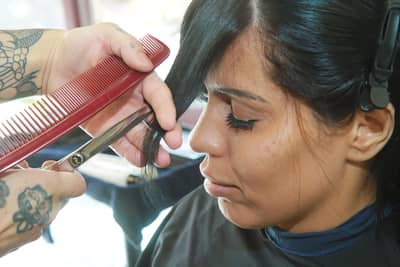
The best haircut for you isn't the same as the best for the person next to you. A Hottie Hair co-founder walks through face shape x texture x lifestyle matching, how often to actually cut your hair, what to ask before booking, and how our three Las Vegas Valley salons approach cuts differently.
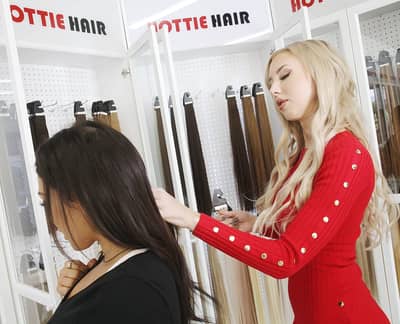
Nervous about your first salon visit? We photographed an actual consultation at our Las Vegas salon — from the welcome to the extension wall to your personalized plan.

Hairstylist, hairdresser, colorist, cosmetologist, master stylist — do these titles actually mean different things? A Hottie Hair co-founder breaks down what each title means, what licensing requires, and how specialization (not job titles) determines who's right for what you want.