Hair Thinning & Volume Loss: Solutions That Actually Work
Thinning hair affects millions of women and men. Whether it's hormonal, stress-related, or genetic, here are the solutions that actually work — from treatments and toppers to extension methods designed for fine hair.
If you've noticed your ponytail getting thinner, your part line widening, or more scalp peeking through than you remember, you're not imagining it — and you're far from alone. Hair thinning affects more than 80 million Americans, and women make up nearly half of that number. Whether it started gradually or seemed to happen overnight, the emotional weight of losing your hair can be just as heavy as the physical reality. This guide is for you: honest, compassionate, and focused on solutions that actually work — from lifestyle changes to professional extensions designed specifically for fine and thinning hair.
At Hottie Hair, our extension specialists across three Las Vegas Valley locations work with thinning hair every single day. We've helped hundreds of women (and men) go from dreading the mirror to genuinely loving their hair again. With $100K+ of premium hair always in stock and a team trained specifically in fine-hair extension techniques, we're sharing the real-world knowledge we use in our chairs — not generic advice from the internet.
What's Inside This Guide
- Understanding Hair Thinning: Types & Causes
- When to See a Doctor vs. a Stylist
- Non-Extension Solutions That Help
- Extension Solutions for Thinning Hair
- Extension Method Comparison for Thin/Fine Hair
- Why the Consultation Matters Most
- Living with Thinning Hair in Las Vegas
- Emotional & Practical Tips
- What to Expect at Your First Appointment

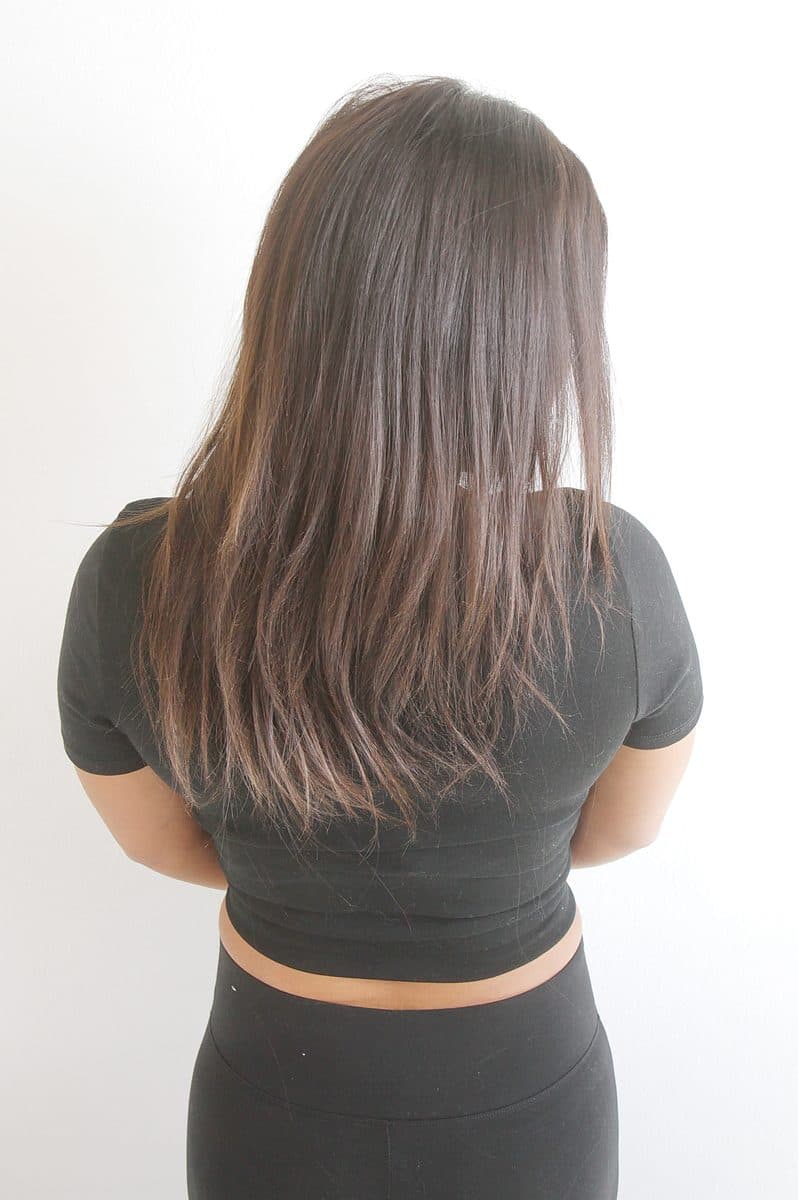
Thinning ends and visible scalp are more common than you think. If this looks familiar, keep reading — there are real solutions.
Understanding Hair Thinning: Types & Causes
Before jumping into solutions, it helps to understand what's actually happening. Hair thinning isn't one-size-fits-all — there are distinct types with different causes, and knowing yours points you toward the right fix.
The average person loses 50-100 hairs per day. When that number increases, when new growth slows down, or when individual strands become finer in diameter, the cumulative effect is what we see as "thinning." Here are the most common causes our clients deal with:
Androgenetic Alopecia
The most common type
Genetic, hereditary thinning that typically causes diffuse thinning across the crown and top of the head in women, and receding hairlines in men. Affects about 50% of women by age 50. Gradual and progressive — the earlier you address it, the more options you have.
Telogen Effluvium
Stress & shock-related
A temporary but alarming increase in shedding triggered by physical or emotional stress: post-pregnancy, surgery, illness, extreme dieting, medication changes, or major life events. The good news: this type usually resolves within 6-12 months once the trigger is addressed.
Traction Alopecia
Caused by tension & styling
Hair loss from repeated pulling or tension — tight ponytails, braids, buns, heavy extensions improperly installed, and over-processing with chemicals. Common along the hairline and temples. Often preventable and sometimes reversible if caught early.
Hormonal Changes
Menopause, thyroid, PCOS
Fluctuating hormones are one of the biggest drivers of hair thinning in women. Menopause, perimenopause, thyroid disorders (especially hypothyroidism), and PCOS all affect the hair growth cycle. Post-menopausal thinning is extremely common and undertreated.
Nutritional Deficiencies
Iron, vitamin D, biotin, zinc
Your hair needs specific nutrients to grow. Iron deficiency (even without full anemia), low vitamin D, insufficient protein intake, and zinc deficiency all contribute to thinning. Blood work can identify these gaps, and supplementation often helps.
Medical Treatments
Medications & chemotherapy
Certain medications (blood thinners, antidepressants, blood pressure meds, birth control changes) can cause hair thinning as a side effect. Chemotherapy causes more dramatic loss. Recovery hair is often different in texture — and extensions can bridge the gap beautifully during regrowth.
Las Vegas-Specific Factor: Hard Water & Extreme Dryness
Living in the Las Vegas Valley adds an extra layer of challenge. Our tap water registers at 278–397 mg/L per SNWA — classified as "very hard" by the USGS. Those calcium and magnesium minerals coat your hair shaft, suffocating follicles and making already-thin hair look and feel even thinner. Combine that with humidity regularly below 15% and intense UV exposure, and you've got a triple threat to fragile hair.
Read our full guide: Las Vegas Hard Water Solutions for Your Hair
When to See a Doctor vs. a Stylist
This is an important distinction, and being honest about it matters to us. Some types of hair loss require medical attention first. Others are best addressed cosmetically. And many benefit from both approaches working together.
See a Doctor When...
- Sudden, rapid hair loss — large clumps or noticeable change within weeks
- Patchy bald spots — may indicate alopecia areata (autoimmune)
- Scalp pain, redness, or scaling — potential infection or inflammation
- Hair loss after starting new medication
- Thyroid symptoms — fatigue, weight changes, temperature sensitivity
- Post-illness or post-surgery shedding that hasn't resolved in 6+ months
- Eyebrow or eyelash loss alongside scalp thinning
A dermatologist or trichologist can run blood work, perform a scalp biopsy if needed, and prescribe medical treatments.
See a Stylist When...
- Gradual thinning over months/years — especially at the crown or part line
- You want more volume and fullness now, not in 6-12 months
- Post-pregnancy hair that's recovering but you want to look and feel better during the process
- Fine hair that's always been thin — not losing hair, just want more of it
- Exploring extension options for coverage, volume, or length
- Your doctor has cleared you and you're ready for cosmetic solutions
- Looking for volumizing cuts, products, and styling techniques
Our extension specialists work with thinning hair daily and know which methods are safe — and which to avoid.
The best approach? Both.
Many of our clients work with a dermatologist and see us for cosmetic volume solutions. Medical treatments (like minoxidil or hormone therapy) can slow or reverse thinning over time, while extensions and toppers provide immediate, visible results. They're not competing strategies — they complement each other beautifully.
Non-Extension Solutions That Help
Extensions aren't the only answer, and they're not always the right first step. Here are proven non-extension approaches that can make a genuine difference — especially when combined together.
| Solution | What It Does | Best For | Timeline |
|---|---|---|---|
| Scalp Treatments | Stimulates follicles, removes buildup, improves circulation. We use the Milbon scalp line for targeted treatment. | Sluggish growth, scalp buildup, early thinning | 4-8 weeks for visible improvement |
| Volumizing Products | Thickening shampoos, root-lifting sprays, and lightweight volumizing mousses that don't weigh fine hair down | Fine hair needing daily volume, mild thinning | Immediate styling benefit |
| Strategic Haircuts | Layers, texturizing, and precision cutting techniques that create the illusion of fullness and movement | Mild to moderate thinning, wanting a polished look | Immediate |
| PRP Therapy | Platelet-rich plasma injected into scalp to stimulate growth. Requires a series of sessions. | Early androgenetic alopecia, general thinning | 3-6 months for results |
| Minoxidil (Rogaine) | FDA-approved topical treatment that prolongs the growth phase. Available OTC. | Androgenetic alopecia (most evidence-backed) | 4-6 months for visible results |
| Chelating Treatments | Removes hard water mineral buildup that suffocates follicles and thins the hair shaft | Anyone in Las Vegas — essential for thinning hair | Immediate improvement in texture |
A note on PRP and minoxidil: We don't offer these services at Hottie Hair — they require a dermatologist or medical provider. But we do work alongside dermatologists regularly and can coordinate care. Many of our extension clients use minoxidil underneath their extensions to address the root cause while the extensions provide immediate volume.

During your consultation, we carefully match color, texture, and density to your natural hair — especially critical for thinning hair where blending must be seamless.
Extension Solutions for Thinning Hair
This is where things get exciting. Modern extension technology has come incredibly far, and several methods are specifically designed to be gentle enough for fine or thinning hair while providing transformative volume. Here's what actually works — and what to avoid.
Hair Toppers — Best Entry Point for Crown Thinning
Hair toppers are essentially the crown jewel (pun intended) for women dealing with thinning at the top of the head — the most common and most visible pattern. They clip onto your existing hair at the crown and blend seamlessly with your natural strands to create the appearance of a full, thick head of hair.
How It Works
- Clips onto existing hair at the crown
- Covers the widening part and thinning crown area
- Available in various base sizes (5x5" to 8x8")
- Removable daily — no permanent commitment
- Can be custom-colored and cut to match perfectly
Why It's Great for Thin Hair
- Zero damage — no adhesives, no heat, no tension
- Targets the exact area of concern
- Lightweight (1-3 oz depending on size)
- Looks like your own hair growing from your scalp
- Put it on and take it off whenever you want
Maintenance: Wash weekly, restyle as needed. Lasts 6-12+ months with proper care.
Starting at: $300-$800+ depending on size, hair quality, and customization
Hand-Tied Weft Extensions — Lightest Weight, Maximum Coverage
Hand-tied weft extensions are often our #1 recommendation for clients with thinning hair who want a semi-permanent solution. The wefts are sewn by hand (not machine), making them thinner, flatter, and lighter than any other weft method. They're attached using a beaded row technique that distributes weight evenly — critical for fragile hair.
How It Works
- Tiny silicone-lined beads are placed along a horizontal row
- A thin thread connects the beads, creating an anchor
- Hand-tied wefts are sewn onto the thread
- No heat, no glue, no tape — purely mechanical attachment
- Custom placement based on your thinning pattern
Why It's Great for Thin Hair
- Lightest weft method available
- Weight distributed across entire row (not concentrated points)
- Lays completely flat against the head
- No slippage or pulling
- Can use fewer wefts for a natural, not-too-thick result
Maintenance: Move-up appointments every 6-8 weeks. Hair reusable for multiple cycles.
Starting at: $800+ for installation (hair cost varies by length and volume)
Real Volume Transformation — Thinning Hair to Full, Beautiful Extensions

Before

After — by Niko Hernandez
Full blonding with keratin extensions — dramatic volume added to thinning hair with seamless blending. See more volume transformations in our transformation gallery.
I-Tip (Micro Link) Extensions — Individual Strand Precision
I-tip extensions are installed one strand at a time using tiny silicone-lined micro rings — no heat, no glue, no chemicals. Each extension strand is threaded through a small section of your natural hair and secured by clamping the micro ring closed. This individual placement makes them ideal for targeted volume exactly where you need it.
How It Works
- Individual strands attached with micro rings
- No heat, no glue — rings clamp shut mechanically
- Placed strand-by-strand for custom density
- Can be placed exactly where thinning is worst
- Removed by opening the ring — zero damage
Why It's Great for Thin Hair
- Each extension bears its own weight — no concentrated stress
- Chemical-free (no bonds or adhesives to react with fragile hair)
- Infinitely customizable placement
- Great for filling in specific areas (temples, hairline, crown edges)
- Natural movement — each strand moves independently
Maintenance: Move-up every 8-12 weeks. Very gentle on natural hair.
Starting at: $600+ for installation (varies by strand count)
Clip-In Extensions — Zero Commitment Volume Boost
Clip-in extensions are the most accessible option for anyone who wants volume on demand without any long-term commitment. They snap in, they come out. Perfect for events, photos, date nights, or days when you just want to feel like yourself again.
How It Works
- Wefts with small pressure-sensitive clips sewn in
- Clip in at the root, remove at end of day
- Available in single wefts or full sets
- No salon appointment needed for application
Why It's Great for Thin Hair
- Zero long-term tension or damage
- Try before committing to permanent extensions
- Great "bridge" solution during medical treatment
- Can add just a few wefts for subtle volume
Maintenance: Wash as needed, store flat. Lasts 6-12+ months.
Starting at: $200-$500 for a quality set
Methods We Don't Recommend for Very Thin Hair
We believe in honesty above sales. Some extension methods that work beautifully on medium-to-thick hair can actually cause problems for fine or significantly thinning hair:
- Tape-in extensions on very thin hair: Tape-ins need a minimum amount of natural hair to sandwich between the two adhesive strips. When hair is too fine or sparse, the bonds can be visible, slip, or put concentrated stress on fragile strands. If you have moderate thinning, tape-ins may still work — but it requires honest assessment.
- Heavy K-tip (fusion) on fragile hair: K-tip extensions use keratin bonds and heat to fuse to your natural hair. The bonds are small but firm, and on very fine or weakened hair, the weight and removal process can cause breakage. Not ideal for hair that's already compromised.
- Machine weft extensions on thin hair: Machine-made wefts are thicker, heavier, and bulkier than hand-tied. The extra weight can strain fine hair and create visible bumps that are harder to conceal when your natural hair is thin.
This is why a proper consultation matters so much. The wrong method can worsen thinning through traction — the right method can transform your look safely.

Our specialists will show you different weft types and weights in person so you can feel the difference — especially important when choosing the gentlest option for your hair.
Extension Method Comparison for Thin/Fine Hair
Here's a side-by-side comparison of every extension method and how it performs specifically for fine and thinning hair:
| Method | Weight | Visibility | Damage Risk | Best For | Starting Price |
|---|---|---|---|---|---|
| Hair Topper | Ultra-light | Undetectable | Minimal | Crown/top thinning | $300+ |
| Hand-Tied Weft | Very light | Low | Low | All-over volume | $800+ |
| I-Tip (Micro Link) | Light | Very low | Low | Targeted fill-in | $600+ |
| Clip-In | Varies | Low-Medium | Minimal | Occasional volume | $200+ |
| Tape-In | Medium | Medium | Moderate* | Moderate thickness+ | $500+ |
| K-Tip (Fusion) | Medium | Low-Medium | Moderate-High* | Thick hair only | $700+ |
* Damage risk for tape-ins and K-tips is specifically elevated for thin/fine hair. On healthy, medium-to-thick hair, these methods are perfectly safe. The distinction is about your individual hair's ability to support the weight and attachment.
Why the Consultation Matters Most
We cannot overstate this: a proper in-person consultation is the most important step in the entire process when you're dealing with thinning hair. This isn't about upselling — it's about protecting your hair.
Online quizzes and Instagram comparisons can point you in a general direction, but thinning hair requires hands-on, individualized assessment that simply cannot happen through a screen.
What We Assess
- Hair density: How many strands per square inch (not just perceived thickness)
- Hair diameter: Fine, medium, or coarse individual strands
- Scalp condition: Sensitivity, inflammation, existing irritation
- Thinning pattern: Diffuse, crown-focused, hairline, or all-over
- Elasticity and breakage: How strong is the existing hair?
- Current treatments: Are you using minoxidil, other products?
Why It Matters for Thin Hair
- Wrong method = worse thinning: Heavy extensions on fragile hair cause traction alopecia
- Weight distribution: Placement strategy is completely different for thin vs thick hair
- Fewer rows/bonds may be better: More isn't always more with fine hair
- Custom blending: Thin hair requires more precise color and density matching
- Honest recommendations: Sometimes the answer is "not yet" or "try this first"
- Realistic expectations: We'll show you exactly what's achievable

Our team collaborates on placement strategy for every thinning hair client — because the plan matters as much as the product.
No judgment. No pressure. Just honesty.
Every consultation at Hottie Hair is free and private. If we don't think extensions are right for your situation, we'll tell you. If we think you should see a dermatologist first, we'll say that too. Our reputation is built on trust, not on selling someone something that isn't right for them.
Living with Thinning Hair in Las Vegas
The Las Vegas Valley presents specific challenges for anyone dealing with thinning hair. Our local environment actively works against fragile hair in ways that people in other climates don't experience. Here's what to know and how to fight back:
Hard Water Mineral Buildup
Las Vegas has some of the hardest water in the US. Those minerals coat your hair shaft, making already-thin hair look even thinner and feel like straw. The buildup can also clog follicles and slow new growth.
Solution: Install a shower filter, use a chelating shampoo 1-2x monthly, and get professional clarifying treatments quarterly.
Extreme Dryness & Low Humidity
With humidity regularly dropping below 15%, your hair loses moisture rapidly. Fine and thinning hair is already more vulnerable to dehydration, leading to increased breakage and static.
Solution: Leave-in conditioner daily, deep conditioning treatment weekly, avoid excessive heat styling that compounds the dryness.
UV Exposure on Visible Scalp
When your hair is thinner, more scalp is exposed to Nevada's intense UV rays (8+ UV index average). This can damage the scalp skin itself and potentially affect follicle health.
Solution: Scalp-specific SPF spray or powder, hats when outdoors for extended periods, and awareness that sunburn on a thinning scalp is both painful and harmful.
Pool & Spa Chemicals
Las Vegas is a pool city. Chlorine strips what little natural oil your fine hair produces, and combined with our already-dry air, the damage compounds. Copper in pool water can even tint light hair green.
Solution: Wet hair with clean water before swimming, use a leave-in UV protectant, rinse immediately after, and follow our pool protection guide.

See how thin and flat a hand-tied weft is? This is why they're our top recommendation for fine hair — virtually undetectable weight against the scalp.
Emotional & Practical Tips
We need to talk about the emotional side of this. Hair thinning and hair loss are deeply personal experiences, and the psychological impact is real and valid. Our chairs have held a lot of tears, a lot of vulnerability, and ultimately, a lot of joy. Here's what we want you to know:
This Is Not Your Fault
Hair thinning is influenced by genetics, hormones, age, health conditions, and environment. You didn't cause this by using the wrong shampoo or wearing too many ponytails (though traction alopecia is a real thing, it's one of many causes). Stop blaming yourself. Start exploring solutions.
Solutions Exist at Every Budget
From a $15 volumizing mousse to $40 scalp treatments to $200 clip-ins to $800+ professional extensions — there's something for every budget and every level of thinning. You don't have to spend thousands to start feeling better about your hair. Start where you are and build from there.
Track Your Progress
Take photos. The same angle, same lighting, once a month. When you look in the mirror every day, changes happen so gradually that you don't see them — good or bad. Progress photos help you see what's actually working and give you data to share with your stylist or doctor.
You're Not Alone
More than 30 million women in the US are dealing with some form of hair thinning right now. We see multiple clients every week who are on this exact journey. You are not the exception — you're part of a massive community, and there is so much more support and science available today than even five years ago.
Real Client Transformation — Extensions for Volume and Fullness

Before

After — by Niko Hernandez
Professional hair extension installation and styling — the moment volume returns is everything. See more volume transformations in our transformation gallery.
What to Expect at Your First Appointment
We know that walking into a salon and saying "my hair is thinning" can feel incredibly vulnerable. Here's exactly what happens at a Hottie Hair consultation so there are no surprises:
Private, Comfortable Setting
Your consultation happens in a private area — not in the middle of the salon floor. We respect the sensitivity of this conversation. It's just you and your specialist.
Honest Assessment
We'll look at your hair's density, diameter, scalp condition, and thinning pattern. We'll ask about your history — when it started, any medical factors, your goals and lifestyle. No rush, no judgment.
Options Presented — Not Pushed
Based on our assessment, we'll explain which methods are safe for your hair, which we'd recommend, and which we'd avoid. We'll show you sample hair, explain pricing, and answer every question. If extensions aren't the right move yet, we'll say so.
Color and Texture Matching
If you decide to move forward, we'll match color and texture right there — you can see and feel the exact hair that would be used. With $100K+ always in stock, we almost always have your match on hand.
No Pressure to Commit Same Day
Take your time. Go home, think about it, talk to your partner, do more research. We'll be here when you're ready. Many of our clients come back a week or two later after sitting with the information — and that's completely fine.

The transformation isn't just in the hair — it's in the confidence, the posture, the whole feeling of walking out knowing your hair looks incredible.
Continue Your Research
We've written in-depth guides on many of the topics covered here. Dive deeper into the methods that interest you:
Hair Toppers: The Complete Guide
Everything you need to know about toppers for crown thinning.
Beaded Weft Extensions Guide
Our lightest-weight semi-permanent extension method explained.
Tape-In Extension Care Guide
If tape-ins are right for your hair, here's how to maintain them.
Hard Water Solutions for Las Vegas
Protect your hair from mineral buildup in our extreme water.
How Long Do Extensions Last?
Longevity comparison for every extension method in Nevada.
Before & After Transformations
See real client results — many starting with thin or fine hair.
Your Hair Doesn't Have to Stay This Way
Book a free, private consultation at any of our three Las Vegas Valley locations. No judgment, no pressure — just an honest conversation about what's possible for your hair. Hundreds of women have walked through our doors feeling exactly the way you feel right now. They left feeling different.
(702) 979-4468 | Mon-Sat 10AM-7PM
Henderson | Summerlin West | South Summerlin
Visiting Vegas?
See same-day extensions, color, and cut — the full salon experience before you fly home.
Related Articles
Continue reading about extensions
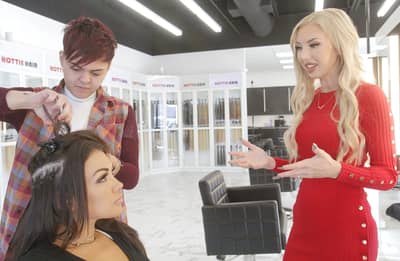
Mesh integration, wigs, and hair toppers each solve hair loss differently. This side-by-side comparison covers coverage, cost, lifestyle fit, Las Vegas climate considerations, and how to decide which solution is right for you.
Want to try extensions without committing to a full install? Clip-ins, ponytails, and toppers let you add length, volume, and coverage at home. Here's your complete guide to choosing, applying, and caring for DIY extensions.
A hair topper adds coverage to the top of your head — part, crown, temples — and blends into your own hair. It's not a wig, and for most women with thinning on top it's the better answer. A Hottie Hair co-founder breaks down who toppers are for, weft vs. skin/mono bases, real Las Vegas pricing ($150–$1,000), professional install vs. clip-in, and why you should always try one on free before buying.