Is the Brazilian Blowout Banned? Safety, FDA Status & Alternatives (2026)
No — the Brazilian Blowout is not banned. The FDA has repeatedly delayed its proposed rule on formaldehyde in hair smoothing products, missing its December 2025 target with no rule proposed as of mid-2026. Here's what the concern is actually about, how we handle it in our salons, and the formaldehyde-free alternatives if you'd rather skip it.
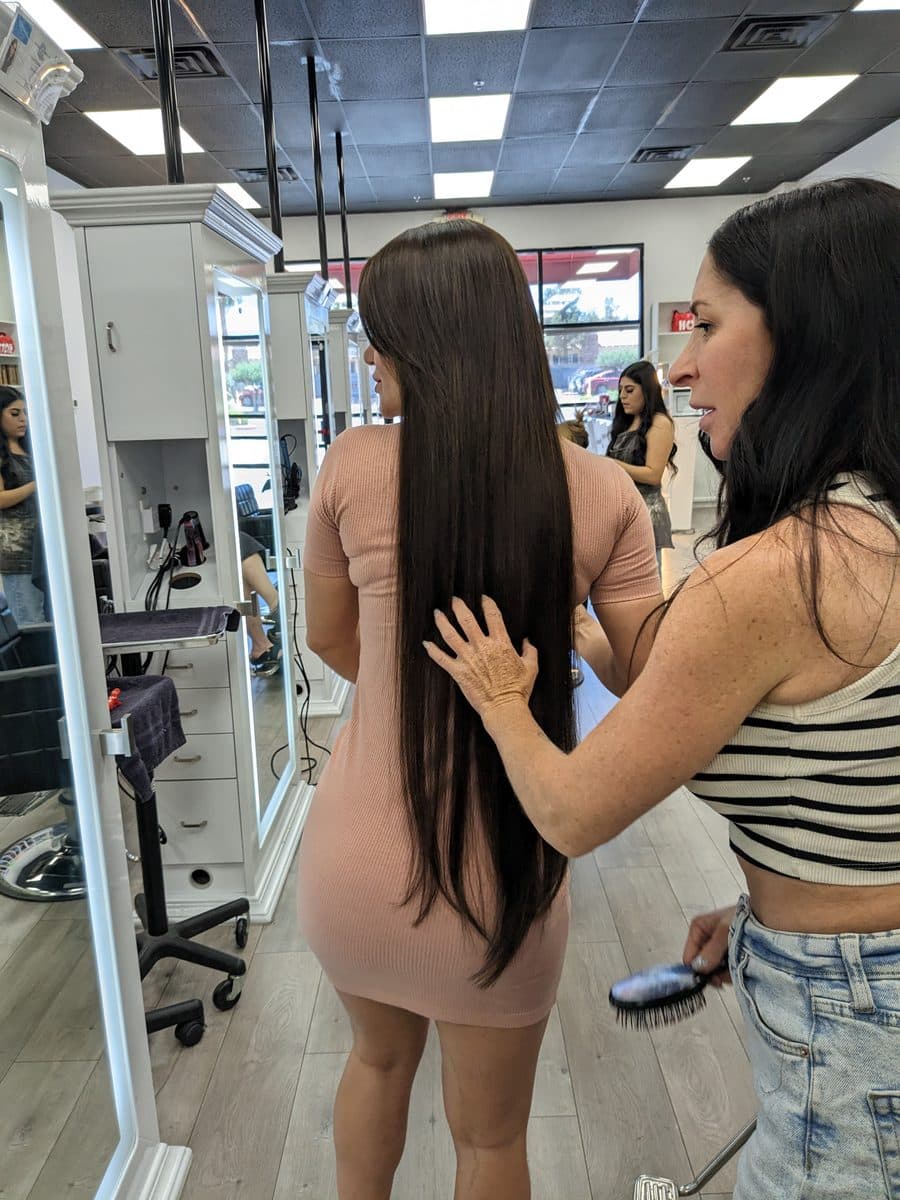
By Crystal Frehner, Hottie Hair co-founder. Clients have been asking us some version of "wait — isn't the Brazilian Blowout getting banned?" for a couple of years now, and the online answers range from panic to denial. Neither helps you make a decision. Here's the actual regulatory status as of mid-2026, what the concern is really about, how we handle it in our salons, and the formaldehyde-free alternatives if you'd rather skip the conversation entirely.
No — the Brazilian Blowout is not banned in the United States as of 2026. The FDA announced in 2023 that it intended to propose a rule banning formaldehyde and formaldehyde-releasing ingredients in hair smoothing and straightening products, but that proposal has been delayed repeatedly — the agency missed its most recent target date of December 31, 2025, and no rule has been proposed, let alone finalized. Smoothing treatments remain legal, available, and popular. What the headlines should prompt is an informed choice — so here's the full honest picture.

Smooth, frizz-free hair is still very much on the menu — the real question is which treatment chemistry you're comfortable with.
The 30-Second Answer
- Banned? No. The FDA has discussed proposing a ban on formaldehyde in hair smoothing products since 2023, but has repeatedly delayed — no rule is proposed or in effect as of mid-2026.
- The concern: some smoothing treatments use ingredients that can release formaldehyde when heated during application — primarily an air-quality issue managed with ventilation and trained application.
- The headline studies that linked hair products to health risks focused primarily on chemical relaxers — a different product category from salon smoothing treatments.
- Our approach: trained stylists, proper ventilation, honest consultations — and real alternatives if you'd rather go formaldehyde-free.
- Alternatives we offer: Japanese thermal straightening ($400–$600), Milbon restorative treatments, and professional blowouts.
- Talk it through: free consultation or call/text (702) 979-4468.
In This Guide
The Actual Regulatory Status (Mid-2026)
Here's the timeline, without spin. In October 2023, the FDA announced it intended to propose a rule that would ban formaldehyde and formaldehyde-releasing ingredients (like methylene glycol) as ingredients in hair smoothing and straightening products marketed in the US. That announcement generated the "Brazilian Blowout banned" headlines that still circulate today.
What's happened since: the proposal target has been pushed back repeatedly — from October 2023 to April 2024, then November 2024, March 2025, July 2025, and most recently December 31, 2025, a deadline the agency also missed. As of mid-2026, no rule has been proposed. The FDA has said the rule remains a priority and that it will provide periodic updates through its regulatory agenda, but there is no ban, no proposed ban text, and no timeline anyone can bank on.
Two practical takeaways. First: salon smoothing treatments are fully legal today, and even if a rule were proposed tomorrow, federal rulemaking involves comment periods and implementation windows measured in years. Second: the direction of regulatory attention is real, which is why we think every client deserves the honest version of the next section rather than a shrug.
What the Concern Is Actually About
Some keratin-type smoothing treatments use ingredients that can release formaldehyde gas when heated — and heat is part of the application process (blow-drying and flat-ironing the solution into the hair). The primary, best-established concern is occupational air quality: stylists who perform many of these services in poorly ventilated spaces face the most meaningful exposure, which is why ventilation and application protocols matter so much. For clients, exposure is occasional rather than repeated — a different risk profile, though not zero, and eye or respiratory irritation during application is a documented short-term effect for sensitive individuals.
We're not going to tell you formaldehyde concerns are invented — they aren't, and OSHA has published guidance for salons on exactly this topic for over a decade. We're also not going to tell you a smoothing treatment is reckless — performed properly, with ventilation, by a trained stylist, at a sensible frequency, it's a service millions of people choose with open eyes. Our job is to give you the real picture and respect your decision.
Smoothing Treatments vs. Relaxers — An Important Distinction
A lot of the scariest headlines from the past few years — the studies linking hair products to elevated risks of certain cancers — were about chemical relaxers and permanent straighteners, lye and no-lye products used frequently and long-term, and marketed heavily to Black women. Those findings are serious and deserve their headlines. But a semi-permanent smoothing treatment like a Brazilian Blowout is a different product category with different chemistry and a different use pattern — it coats and smooths the hair for a few months rather than permanently restructuring it, and it washes out gradually.
Conflating the two doesn't help anyone make a good decision. If you've been avoiding all smoothing services because of relaxer headlines, that distinction is worth knowing. And if you want the deeper technical comparison between smoothing options themselves, our Brazilian Blowout vs. keratin treatment guide and Brazilian Blowout vs. Japanese straightening comparison go method by method.
Not sure which smoothing option fits you?
A free consultation looks at your hair's condition, your goals, and your comfort level — and gives you an honest recommendation, including "skip it" when that's the right answer.
How We Handle It in Our Salons
- Trained application. Our stylists are trained on the specific products we use — correct solution amounts, correct heat, correct timing. Most horror stories trace to overtreatment.
- Ventilation. The service is performed with airflow in mind, which protects our team as much as our clients — they're the ones here every day.
- Honest candidacy checks. A Brazilian Blowout isn't right for every head of hair or every situation, and we'll say so at the consultation — not after you've paid.
- No pressure toward any treatment. We offer multiple paths to smooth hair. If you tell us you'd rather avoid formaldehyde-releasing products entirely, the conversation simply moves to the alternatives below — no eye-rolling, no upsell.

Professional application is most of the safety story — product amounts, heat, timing, and airflow are all controlled variables in a salon.
Who Should Consider Skipping It
Straight talk: we'd steer you toward an alternative if you're pregnant or nursing (most guidance says defer elective chemical services — ask your doctor, not your stylist), if you have respiratory sensitivities or have reacted to salon chemical services before, or if your hair is already severely compromised from bleaching — a repair-first plan with Milbon treatments makes more sense than any smoothing service. And if the formaldehyde question simply doesn't sit right with you, that's a complete reason on its own. Smooth hair is a preference, not a medical necessity — there's no version of this where you should override your own comfort level.
Formaldehyde-Free Alternatives We Offer
Japanese Thermal Straightening
Japanese thermal straightening uses a completely different chemistry — a thio-based process (the same family as perm chemistry, run in reverse) that permanently restructures the hair straight. No formaldehyde-releasing ingredients involved. It delivers pin-straight, permanent results rather than the softer, semi-permanent smoothing of a Brazilian Blowout, so it suits a different goal: if you want straight, this is the stronger tool; if you want smoother and frizz-free while keeping your wave, it's the wrong one. Our Japanese straightening guide covers candidacy in depth.
Milbon Restorative Treatments
A lot of frizz is actually damage — and repairing the hair often delivers much of the smoothness people were seeking from a chemical service. Our Milbon treatment menu rebuilds the hair's internal structure and is the right first move for hair that's dry, porous, or fighting the Las Vegas triple threat of hard water, UV, and desert air. The Milbon guide explains the system.
Professional Blowouts
Zero chemistry, all technique: a professional blowout delivers the smooth, bouncy finish for days at a time — and in Las Vegas's low humidity, blowouts genuinely last longer than they do in humid climates. For events, it's often all you need; our blowout guide has the details.
What These Treatments Cost at Hottie Hair
| Treatment | Price | Result |
|---|---|---|
| Brazilian Blowout | $280–$340 by length/thickness | Semi-permanent smoothing, ~3 months |
| Japanese Thermal Straightening | $400–$600 by length/thickness | Permanent straightening of treated hair |
| Milbon treatments | Varies by treatment | Repair-based smoothness and strength |
Full treatment pricing — including Milbon options and perms — is in our Las Vegas hair treatment cost guide. As with everything at Hottie Hair, prices are flat and identical with every stylist.
Make the Call With Real Information
Whichever way you're leaning, a free consultation gets you an honest read on your hair and every option on the table. Call or text (702) 979-4468 or book online at any of our three Las Vegas locations.
Book a Free ConsultationWhere to Get Smoothing Treatments in Las Vegas
Hottie Hair performs Brazilian Blowouts, Japanese thermal straightening, and Milbon treatments at all three Las Vegas Valley salons: West Charleston in Summerlin, South Maryland Parkway in Henderson, and Durango in the Southwest. West Charleston and South Maryland run Monday–Saturday 10 AM–7 PM; Durango runs Tuesday–Saturday 10 AM–6 PM. For the full landscape of straightening options, start at our hair straightening hub or the original Brazilian Blowout guide.
Frequently Asked Questions
Is the Brazilian Blowout banned?
No. As of mid-2026, no US ban exists on Brazilian Blowouts or formaldehyde-releasing smoothing products. The FDA announced in 2023 that it intended to propose such a rule, but the proposal has been delayed repeatedly — the agency missed its December 2025 target and no rule has been formally proposed.
Is the Brazilian Blowout safe?
Performed properly — trained stylist, correct product amounts, good ventilation, sensible frequency — it's a service many people choose comfortably. The documented concerns center on formaldehyde released when the solution is heated, which matters most as repeated occupational exposure for stylists in poorly ventilated spaces. If you're pregnant, chemically sensitive, or simply uncomfortable with the chemistry, formaldehyde-free alternatives deliver smooth hair a different way.
Did studies link Brazilian Blowouts to cancer?
The widely covered studies linked chemical relaxers and permanent straighteners — a different product category, used frequently and long-term — to elevated risks of certain cancers. Semi-permanent smoothing treatments have a different chemistry and use pattern. The legitimate Brazilian Blowout concern is formaldehyde exposure during application, which is primarily an air-quality and occupational issue.
What's the best formaldehyde-free alternative to a Brazilian Blowout?
Depends on your goal. Want permanently straight hair? Japanese thermal straightening ($400–$600) uses a completely different, formaldehyde-free chemistry. Want smoother, healthier hair that keeps its natural movement? Milbon restorative treatments repair the damage that causes most frizz. Want smooth for an event? A professional blowout lasts days in Las Vegas's dry air.
How much does a Brazilian Blowout cost in Las Vegas?
At Hottie Hair, $280–$340 depending on hair length and thickness, flat-priced with every stylist. Results typically last around three months with sulfate-free home care.
Would a future FDA ban make my past treatments dangerous?
No — a rule, if one is ever proposed and finalized, would govern products marketed going forward; it isn't a retroactive judgment on individual past services. Occasional client exposure is a very different profile from the repeated occupational exposure driving the regulatory attention.
Can I get a Brazilian Blowout while pregnant?
We'd recommend deferring — most guidance suggests postponing elective chemical hair services during pregnancy, and this is a question for your doctor rather than a salon. In the meantime, blowouts and repair treatments keep hair smooth without the chemistry question.
Smooth Hair, Your Way
Brazilian Blowout, Japanese straightening, Milbon repair, or a great blowout — honest guidance on all four at any of our three Las Vegas salons.
Book a Free ConsultationOr call/text (702) 979-4468
Visiting Vegas?
See same-day extensions, color, and cut — the full salon experience before you fly home.
Related Articles
Continue reading about treatments
The third in our cost-guide series (after extensions and color): what hair treatments actually cost. A Hottie Hair co-founder breaks down smoothing (Brazilian Blowout $280–$340, Japanese thermal $400–$600), perms ($155–$250), and conditioning/bond treatments (Metal Detox $30, Formula 18 $40, Milbon $75–$150) — what each does, how long it lasts, and how to tell which you need.

Can't decide between a Brazilian Blowout and Japanese Thermal Straightening? Our Las Vegas stylists break down how each treatment works, who it's best for, aftercare differences, and how Nevada's climate affects your results.

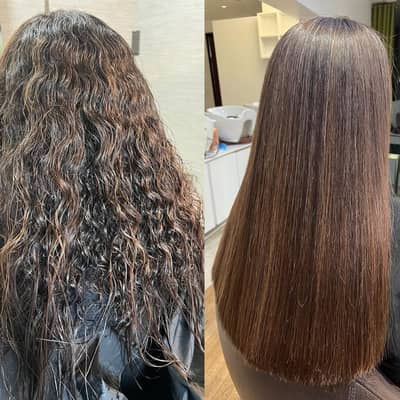
Transform curly or frizzy hair into permanently sleek, straight locks with Japanese thermal straightening. Expert process, aftercare, and cost guide from our Henderson and Summerlin specialists.