
What Is a Move-Up Appointment? Hair Extension Maintenance Explained (2026)
A move-up appointment is the recurring maintenance that resets your extensions back up to your scalp as your natural hair grows out. It's required, not optional — skipping it is the #1 cause of matting and damage. A Hottie Hair co-founder explains how often you need one for each method (tape-in, K-tip, I-tip, hand-tied, beaded weft), real Las Vegas move-up pricing, what happens at the visit, and why your original hair gets reused.
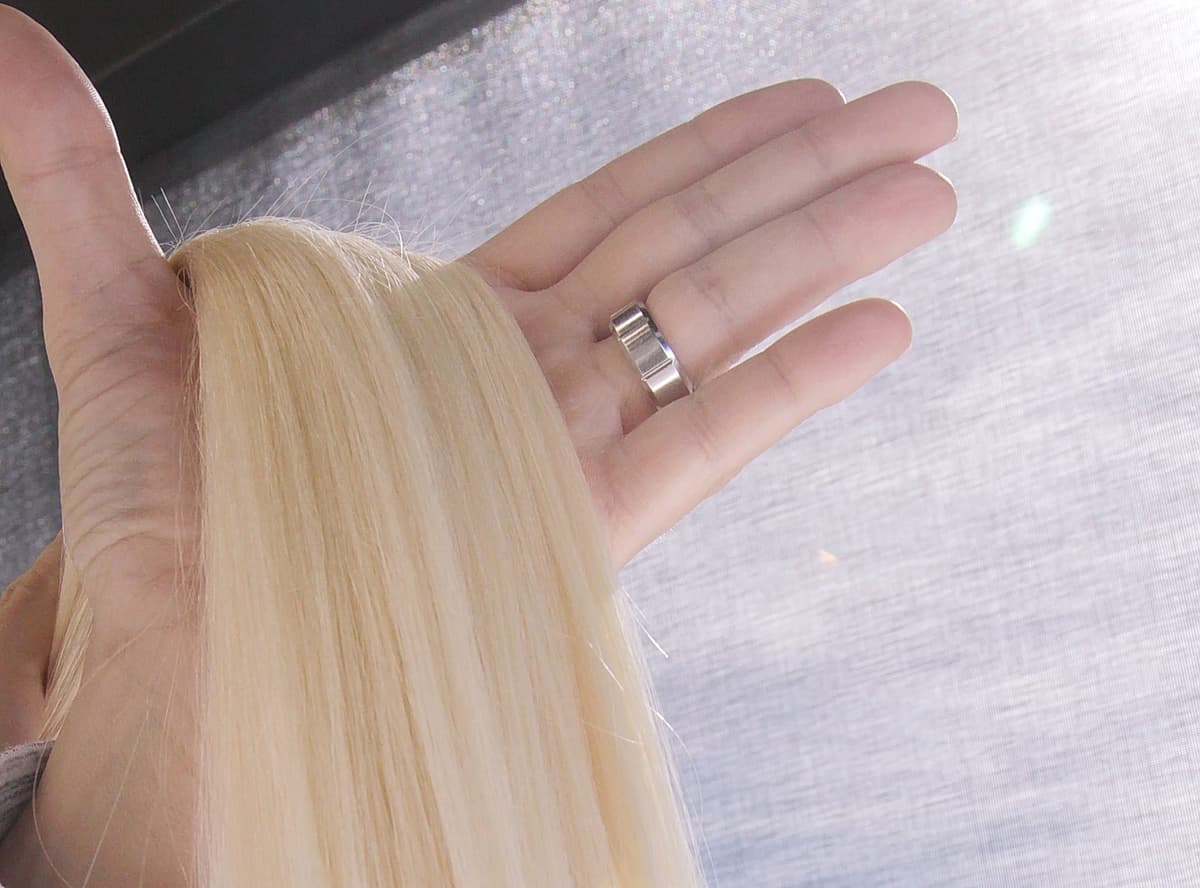
By Crystal Frehner, Hottie Hair co-founder. "What's a move-up appointment?" is one of the questions we answer most on the phone — usually from someone who just got extensions somewhere else and was never told they'd need to come back. So here's the honest, complete explanation: what a move-up is, how often you need one for each extension type, what it costs, and what actually happens if you skip it.
A move-up appointment is routine maintenance for hair extensions. Your natural hair grows about half an inch a month, and as it grows, your extensions slowly travel down with it — away from your scalp. A move-up resets them back up to the root so they sit flat, blend invisibly, and stay comfortable. It is not optional. It's the single most important thing that separates extensions that look amazing for a year from extensions that get matted, damage your hair, and have to be cut out.

A move-up resets your extensions back up to the scalp as your natural hair grows out — the maintenance step that keeps the whole investment looking right.
The 30-Second Answer
- A move-up appointment repositions your extensions back up to the root after your natural hair has grown out and pushed them down. Same hair, reset to the scalp.
- How often depends on the method: tape-ins roughly every 6–8 weeks, K-tip and I-tip every 8–12 weeks, hand-tied and beaded wefts every 6–10 weeks. Your stylist sets your exact cadence.
- It's required, not optional. Skipping move-ups is the number-one cause of matting, tangling, and the kind of tension that damages your own hair.
- At Hottie Hair, move-up pricing is transparent and by-the-piece or by-the-row: tape-in move-ups from $90, hand-tied wefts $165/row, K-tip from $125, mesh and toppers $150–$400. Full table below.
- Most of your original extension hair is reused at a move-up — you're paying for the labor of resetting it, not a whole new set. Book through our service builder or call (702) 979-4468.
What a Move-Up Appointment Actually Is
When extensions are installed, they're attached as close to your scalp as is safe — at the root. Over the following weeks, your natural hair grows out from the scalp, and because the extension is attached to that hair, it rides downward with it. After six to ten weeks (depending on the method), the attachment point has migrated an inch or more away from your head. You can feel it: the bonds or wefts sit lower, the hair doesn't lay as flat, and there's a little gap of your own hair between your scalp and where the extension starts.
A move-up fixes that. Your stylist removes the extensions (or, for sewn wefts, undoes the rows), gently detangles and cleans up any shed hair, and re-installs the same extension hair back up at the root. For tape-ins the old tape tabs are replaced with fresh adhesive; for K-tips and I-tips the bonds or beads are reset; for hand-tied and beaded wefts the rows are re-tightened and re-sewn higher. The result is extensions that look brand-new again, because in terms of position, they basically are.
Some methods use the words "move-up," some say "maintenance," some say "tightening," and some say "re-install." They all describe the same thing: the recurring appointment that keeps installed extensions sitting where they're supposed to.
Why Move-Ups Aren't Optional
This is the part people who got extensions elsewhere often weren't told. Extensions are a maintenance commitment, the same way color is. The move-up cadence isn't an upsell — it's structural to how extensions work, and skipping it causes real problems.

Resetting wefts at a move-up. Done on schedule, it protects your natural hair; skipped, it's the fastest way to cause matting and tension.
When an extension grows too far from the scalp, two things go wrong. First, the loose root hair between your scalp and the attachment point starts to tangle and wrap around the bond or weft. That's where matting comes from — and badly matted extensions sometimes have to be cut out, taking some of your own hair with them. Second, the weight of the extension starts pulling on a longer, more vulnerable length of your natural hair, which creates tension at the root. Sustained tension is how extensions earn their bad reputation for "damaging your hair" — but that damage is almost always a maintenance problem, not an extensions problem.
Kept on schedule, properly installed extensions are gentle on your hair. The whole point of professional installation and regular move-ups is to keep the tension distributed and the attachment points fresh so nothing has a chance to mat or pull. If you want the full picture of choosing a salon that does this right, our guide on finding a reputable extension salon covers the warning signs of a place that won't.
How Often You Need a Move-Up — By Extension Type
Different methods grow out at different rates and reattach differently, so the maintenance cadence varies. These are typical ranges — your stylist sets your exact schedule based on how fast your hair grows, how you wear it, and how it's holding up.
| Extension Method | Typical Move-Up Cadence |
|---|---|
| Tape-In | Every 6–8 weeks |
| K-Tip (keratin bond) | Every 8–12 weeks |
| I-Tip (micro-link) | Every 8–12 weeks |
| Hand-Tied Weft | Every 6–10 weeks |
| Beaded Weft | Every 6–10 weeks |
| Mesh Integration | Every 6–8 weeks |
| Installed Topper | Every several weeks, as it grows out |
Las Vegas adds a small wrinkle: our dry desert air and hard water can affect how adhesives and bonds hold, so we sometimes recommend the shorter end of a range here. Not sure which method you have, or which fits your life best? Our extension methods comparison guide walks through all of them by lifestyle and maintenance level.
What a Move-Up Costs at Hottie Hair
Move-up pricing is based on how much you have installed — by the piece for tape-ins and strand methods, by the row for wefts, by size for mesh and toppers. Here's our current menu. The key thing to understand: at a move-up you're paying for the labor of resetting your existing hair, not buying a whole new set, so it costs far less than your initial install.
| Method | Move-Up Pricing |
|---|---|
| Tape-In Install / Move-Up | $90 (10 pcs) → $400+ (50–60 pcs), by piece count |
| K-Tip (Keratin Bond) Install | $125 (25 strands) → $1,000 (200 strands) |
| I-Tip Install / Move-Up | $100 (25 strands) → $800 (200 strands) |
| Hand-Tied Weft Install / Move-Up | $165 per row ($165 → $825 for 1–5 rows) |
| Beaded Weft Install / Move-Up | $105 per row ($105 → $630 for 1–6 rows) |
| Mesh Install / Move-Up | $125 (patch) → $350 (large) |
| Topper Install / Move-Up | $200 (small) / $300 (medium) / $400 (large) |
Most clients reuse the same extension hair through several move-up cycles before it's time to retire it — quality hair lasts a long time when it's cared for. If some hair has shed and you want to replace or add volume, that's available as needed and we'll talk you through it before adding anything. For how all of this fits into the bigger picture of what extensions cost over a year, see our complete extension cost and pricing guide. All prices here reflect our current catalog; we confirm your exact total at the appointment.
What Actually Happens During a Move-Up
If you've never had one, here's the visit start to finish so there are no surprises.
- Removal. Your stylist carefully takes the extensions down — dissolving tape adhesive, opening beads, or undoing weft rows. Done correctly this is gentle and your own hair stays intact.
- Cleanup and detangle. Over six-plus weeks your shed hair (everyone naturally sheds 50–100 strands a day) collects around the attachment points instead of falling out. We comb it out and clean everything up. This step alone is why move-ups prevent matting.
- Wash and prep. A clarifying wash removes oil and product buildup at the roots so the new attachment holds well — especially important against Las Vegas hard-water minerals.
- Re-install at the root. The same extension hair goes back in, reset right up at the scalp. Fresh tape, fresh bonds, or freshly sewn rows.
- Blend, cut, and style. A quick trim or re-blend if needed so everything lays as one head of hair, then a style. You walk out looking like you did the day of your first install.
Time in the chair depends on method and volume — a small tape-in move-up can be under an hour, a full head of hand-tied wefts takes longer. We'll give you a time estimate when you book.
Move-Up vs. a Full New Set: When You Need Each
A common point of confusion is the difference between a routine move-up and buying a whole new set of hair. They're not the same appointment, and most of the time you only need the move-up.
A move-up reuses your existing extension hair — your stylist resets the hair you already own back up to the root. As long as that hair is still in good condition, you'll cycle through move-up after move-up without buying more hair. Quality Remy and virgin hair holds up through many cycles when it's cared for, so a lot of clients go a year or more on their original set before anything needs replacing. If you want the background on why hair grade matters so much for longevity, our guide to virgin vs. Remy vs. non-Remy hair covers it.
A new set only comes into play when the extension hair itself has reached the end of its life — it's shed down too much, lost its luster, or started to tangle no matter how well it's cared for. At that point you're buying fresh hair plus the install, which is closer to your original investment than to a move-up. The good news is this happens far less often than people expect, and your stylist will tell you honestly when your hair is getting close rather than letting you pay to reinstall hair that's on its way out. Worried a salon might push a new set you don't need? That's exactly the kind of thing our reputable salon guide helps you screen for.

Real tape-in extensions at Hottie Hair. The length and fullness on the right only stays seamless with move-ups on schedule — that's what the maintenance cadence is protecting.
How to Get the Most Out of Your Move-Up Cycle
A few habits keep your extensions healthy between appointments and make each move-up easier:
- Book your next move-up before you leave. The biggest cause of skipped maintenance is just not scheduling it. Lock it in on the way out so the cadence never slips.
- Brush daily with the right tool, from the bottom up. A loop brush or extension-safe brush, working up from the ends, prevents tangles at the root.
- Use sulfate-free, extension-safe products and a chelating shampoo for hard water. Vegas water runs around 550 PPM — among the hardest in the nation — and mineral buildup stresses both your hair and the attachment points. Our tape-in care guide and Las Vegas hair care routine both cover this in detail.
- Tie hair up for sleep, workouts, and swimming. A loose braid or bun reduces friction and tangling, which means less cleanup at your move-up and a longer life for the hair.
- Come in early if something feels off. A loose bond or a spot that's tangling is much easier to fix at week four than at week ten. You won't bother us by asking.
Our Three Las Vegas Valley Locations
We handle move-ups for every extension method at all three locations, whether we installed your extensions or you're coming to us from another salon:
- Summerlin / West Charleston — convenient for Red Rock and the west valley
- Henderson — South Maryland Parkway, ideal for Green Valley, Seven Hills, and Anthem
- South Summerlin (Durango) — Mountains Edge and the southwest valley
West Charleston and South Maryland are open Monday through Saturday, 10 AM to 7 PM. Our Durango / Southwest location runs Tuesday through Saturday, 10 AM to 6 PM. Phone: (702) 979-4468 — call or text. New to extensions? Start with a free consultation through our service builder or learn more about extension care.
Frequently Asked Questions
What is a move-up appointment for hair extensions?
It's the recurring maintenance appointment that resets your extensions back up to your scalp after your natural hair has grown out and pushed them down. Your stylist removes the extensions, cleans up shed hair, and re-installs the same hair at the root so it lays flat and blends invisibly again. It's also called maintenance, a tightening, or a re-install depending on the method.
How often do I need a move-up?
It depends on the method: tape-ins roughly every 6–8 weeks, K-tip and I-tip every 8–12 weeks, hand-tied and beaded wefts every 6–10 weeks, and mesh integration every 6–8 weeks. Your hair's growth rate and how you wear it affect the exact timing, so your stylist sets a cadence specific to you and we recommend booking the next one before you leave.
How much does a move-up cost?
At Hottie Hair, move-ups are priced by how much you have installed: tape-ins from $90, K-tip from $125, I-tip from $100, hand-tied wefts $165 per row, beaded wefts $105 per row, mesh $125–$350, and toppers $200–$400. Because you're reusing your existing extension hair, a move-up costs much less than your original install. We confirm your exact total at the appointment.
What happens if I skip my move-up?
Skipping move-ups is the main reason extensions go wrong. As the attachment point grows too far from your scalp, loose hair tangles around it and mats, and the extension's weight pulls on a longer, more fragile length of your own hair, creating tension that can cause breakage. Badly matted extensions sometimes have to be cut out. On schedule, extensions are gentle on your hair; skipped, they're not.
Do I get all-new hair at a move-up, or is it the same hair?
It's the same hair, reset to the root. Quality extension hair lasts through many move-up cycles when it's cared for, so you're paying for the labor of resetting it, not a whole new set. If some hair has shed over time and you want to replace or add volume, that's available as an add-on and we'll always talk you through it before adding anything.
Can I get a move-up if I got my extensions at another salon?
Yes. We take care of move-ups for clients who were installed elsewhere all the time. We'll assess what you have, what condition it's in, and the best way to maintain it. If the original install has issues, we'll be honest about that too and walk you through your options.
How long does a move-up appointment take?
It varies by method and how much you have installed. A small tape-in move-up can be under an hour; a full head of hand-tied wefts takes longer because every row is undone, reset, and re-sewn. We give you a time estimate when you book so you can plan your day.
Due for a Move-Up? Let's Keep Your Hair Looking Right.
Move-ups for every extension method at all three Las Vegas Valley locations — whether we installed your hair or you're coming from another salon. New to extensions? Start with a free consultation.
3 locations: West Charleston (Summerlin) | South Maryland (Henderson) | Durango (South Summerlin)
Book a Free ConsultationVisiting Vegas?
See same-day extensions, color, and cut — the full salon experience before you fly home.
Related Articles
Continue reading about extensions

No extension is literally permanent — 'permanent' means salon-installed methods you wear 24/7, maintained every 6–12 weeks, with hair that can be reused for up to a year. A Hottie Hair co-founder explains every method, the real maintenance rhythm, and the smartest way to start if you've never worn extensions.

Hair extensions cost $180-$3,000+ in Las Vegas depending on method. Tape-in $800-$1,500, K-tip $750-$1,800, I-tip $1,200-$1,800, hand-tied/beaded weft $675-$2,100, clip-in $180-$350. Transparent pricing and budget breakdown from our Las Vegas stylists.

Comparing Bellami Beauty Bar on the Strip with a local extension salon? An honest look at how the two models actually differ — brand showroom vs. multi-method specialty salon — plus the questions worth asking before you book anywhere in Las Vegas.